

Delay Period Tablets: How Norethisterone Works and Who Can Use It
If you want to postpone a period for a holiday, an exam or a wedding, the tablet used in the UK is norethisterone. It is a prescription medicine, you usually take 5mg three times a day starting three days before your period is due, and it does not work for everyone. If you already take the combined contraceptive pill, there is often a simpler route that needs no extra tablets.
This guide explains what the tablets do, how they are normally taken, what can go wrong and which questions to put to a prescriber or pharmacist before you start.
TL;DR
- Norethisterone is the only progestogen licensed in the UK for delaying periods. Other options are used off-licence.
- The usual regimen is one 5mg tablet three times a day, starting at least three days before your period is due.
- It is not a contraceptive. You still need condoms or another reliable method unless you already use a long-acting method.
- Spotting is common, and a delay is not guaranteed. A rare but serious risk is a blood clot, which is why a health screen comes first.
- If you take the combined pill, running packets back to back may be easier than adding norethisterone.
Table of Contents
- What period delay tablets actually do
- How to take norethisterone to delay a period
- What if you take the combined pill?
- It is not a contraceptive
- Side effects and risks
- Will it definitely work?
- Where to get period delay tablets
- Feeling sick on the tablets, or looking for anti-sickness tablets
- Our perspective: calm planning beats a last-minute scramble
- If worry about the event is affecting your sleep
- Questions people ask
- Sources
What period delay tablets actually do
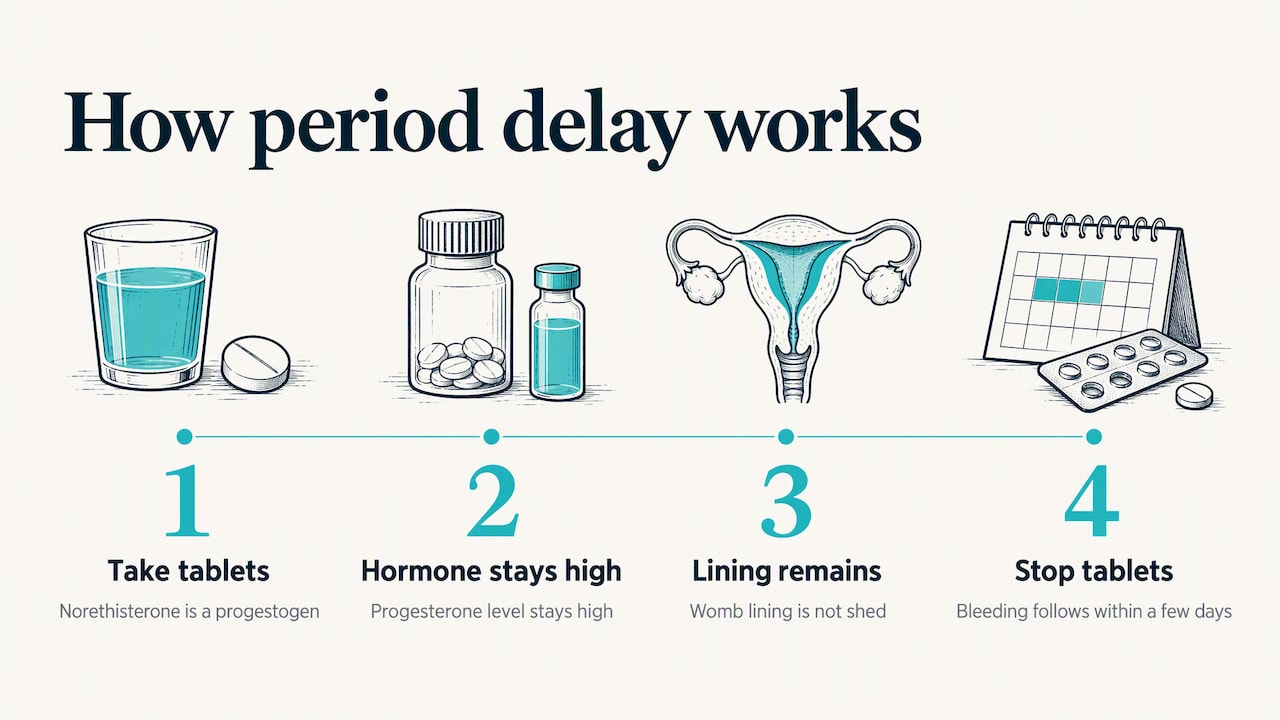
Norethisterone belongs to a group of medicines called progestogens, which are similar to the natural hormone progesterone. Your period starts when progesterone levels fall. Taking a progestogen keeps the hormone level high, so the womb lining is not shed while you are taking it. When you stop, bleeding normally follows within a few days.
That is why timing matters. Sleep is not a switch you flip, and neither is a menstrual cycle. The tablets shift a hormonal process that is already under way, so they need a head start.
The NHS Specialist Pharmacy Service describes norethisterone as the licensed choice for this purpose, but also says it is not always the most appropriate one. Whether it suits you depends on your health history, your contraception and how long you need the delay.
How to take norethisterone to delay a period
The following reflects UK clinical guidance and the patient leaflet. Your prescriber’s instructions always come first.
- Start three days before your period is due. The patient leaflet advises starting at least three days ahead. Starting later raises the chance of breakthrough bleeding.
- Take one 5mg tablet three times a day. That is 15mg in total, spaced roughly eight hours apart. Clinical guidance gives this as the typical dose.
- Stop when you want your period to return. Bleeding usually follows within two to three days of the last tablet, though it can vary.
- Keep within the duration you were given. Guidance sets treatment limits of around 10 to 14 days, or up to 17 days depending on clinical instruction. Some online services state longer periods, so follow the leaflet and the person prescribing for you.
A worked example: your period is due on a Friday and you fly on the following Thursday. You would start the tablets on the preceding Tuesday, take three a day through the trip, and stop on your return. You would expect bleeding to begin a few days after your last dose.
How long can you delay a period?
Short term only. Pages that rank for this topic quote different maximums, from about two weeks to a month, because services and prescribers differ. The safest approach is to use the shortest delay that covers your event. If you need more than your prescriber has advised, ask them rather than extending it yourself.
What if you take the combined pill?
Norethisterone cannot be combined with the combined oral contraceptive pill, according to the research we reviewed. But you may not need it. NHS guidance from a GP surgery explains that if you take a combined pill, you can delay bleeding by starting the next packet straight after finishing the last, with no break.
The bleed in your pill-free week is a withdrawal bleed, not a biological necessity. Devon Sexual Health notes that skipping pill breaks can mean fewer headaches, bloating and period pains for many people. Different pill brands have different rules about how many packets you can run together, so check your leaflet or ask a pharmacist first.
| Your situation | Usual approach |
|---|---|
| Take the combined pill | Run packets back to back, as your leaflet or prescriber allows |
| No hormonal contraception, occasional event | Norethisterone from a prescriber |
| Want regular control of periods | Discuss long-term options such as the combined pill or long-acting methods |
| Have a coil or implant | Ask a prescriber whether norethisterone is suitable |
It is not a contraceptive
This is the most common misunderstanding. Norethisterone taken to delay a period does not prevent pregnancy. The patient leaflet is clear that you need barrier protection such as condoms unless you already use an effective method that is compatible with it.
If your period does not arrive after you stop the tablets, take a pregnancy test. The leaflet guidance is that no bleeding should prompt a test.
Side effects and risks
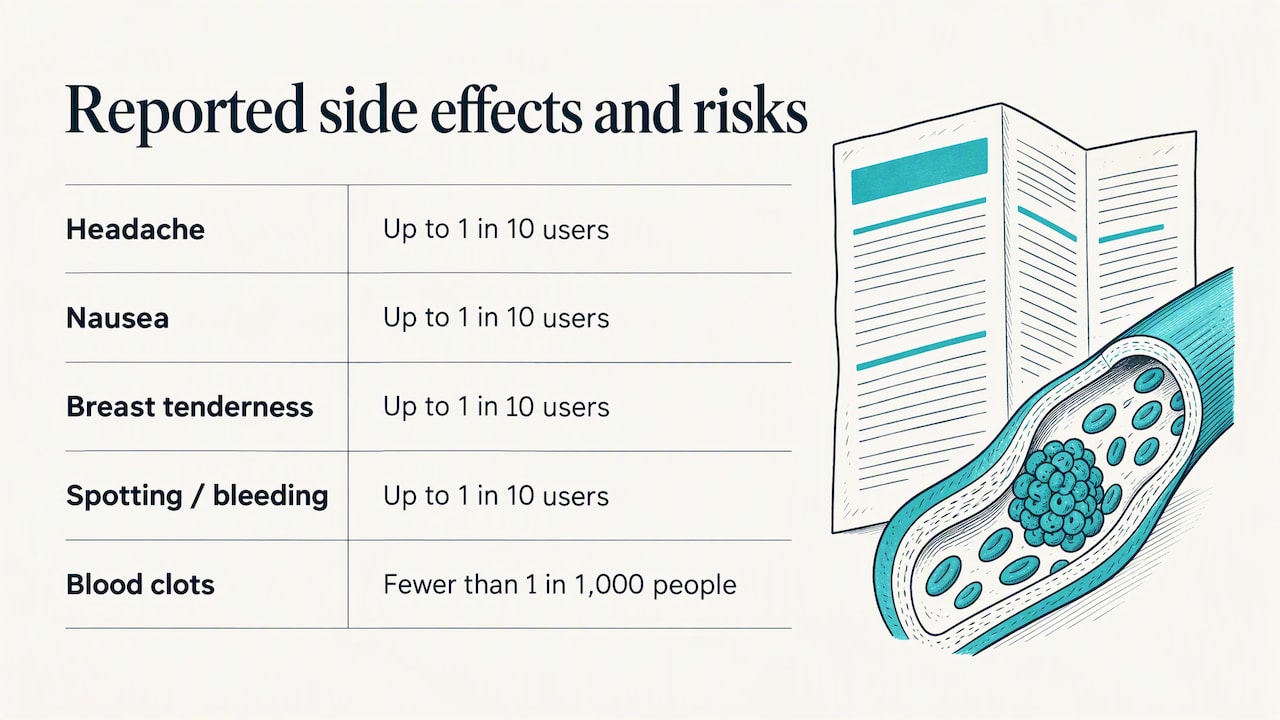
Most people tolerate a short course well, but side effects do happen. The leaflet lists headache, nausea, breast tenderness and spotting or breakthrough bleeding among those reported in up to 1 in 10 users.
The serious risk is rare. Blood clots such as deep vein thrombosis occur in fewer than 1 in 1,000 people, according to the same leaflet. The risk is worth taking seriously because the delay dose is high. A NHS formulary entry notes that the dose is metabolised partly into ethinylestradiol, giving a clot risk comparable to a 30-microgram combined pill. It also advises screening for factors such as a BMI over 30 or a history of blood clots.
If you travel by air, long-haul flights add their own clot risk, so mention your travel plans when you talk to the prescriber.
Who should speak to a doctor before using them
Book a conversation with your GP, a pharmacist or a sexual health clinic before taking norethisterone if any of these apply:
- You have had a blood clot, or someone close in your family has.
- Your BMI is over 30.
- You are pregnant, might be pregnant, or are breastfeeding.
- You have liver problems or unexplained vaginal bleeding.
- You take other regular medicines, including herbal ones. Check the leaflet for interactions.
Seek urgent medical help for a painful, swollen leg, sudden breathlessness or chest pain while taking the tablets.
Will it definitely work?
No. Practitioners stress that delay is not guaranteed. Breakthrough bleeding is not unusual, especially if you start late. Think of the tablets as a hormonal shift that aims to postpone bleeding, with individual variation. Carry period products anyway.
The same guidance says these tablets are meant for occasional use. If you find yourself wanting to suppress periods regularly, a long-acting method or the combined pill is usually safer and better suited. A GP practice leaflet also describes norethisterone as the only progestogen licensed in the UK for delaying bleeding.
Where to get period delay tablets
You need a prescription or a consultation with a prescriber. The usual routes in the UK are:
- Your GP or sexual health clinic. Often the best place if you have health conditions or use other contraception.
- A community pharmacy offering a consultation service. Many provide a short clinical assessment.
- A UK-registered online prescribing service. Check that it is registered with the Care Quality Commission, and that a clinician reviews your answers to the health questionnaire.
Be cautious of any seller that supplies the tablets without asking about your health, your contraception and your clot risk. A proper service will ask.
Feeling sick on the tablets, or looking for anti-sickness tablets
Some readers arrive here asking about anti-sickness tablets, often in the same breath as period delay. There are two separate situations.
If nausea comes from norethisterone, it is a listed side effect. Taking the tablet with food can help some people, but ask a pharmacist, and tell your prescriber if it persists or you vomit, since vomiting could affect how much hormone you absorb.
If you want a travel sickness remedy for the holiday itself, a pharmacist can recommend a suitable product over the counter. Say which period delay tablet you are taking so they can check for interactions. Do not add medicines on a guess.
Our perspective: calm planning beats a last-minute scramble
We are an online pharmacy for prescription medicines, and our everyday customers are people managing anxiety, poor sleep and pain. We do not offer period delay tablets, and we would rather say so plainly than imply otherwise. What we do see is how often health decisions get squeezed into the last 48 hours before something important.
Period delay is a good example. The tablets need three days’ notice, a health screen and a clear head about contraception. Rushing removes all three. Our advice is practical and unglamorous:
- Decide at least a week ahead, so there is time for a consultation and delivery.
- Ask a prescriber about your own risk factors, not just the dose.
- Do not mix hormonal products without clinical guidance.
- Treat any unexpected bleeding, pain or swelling as a reason to call a professional.
There is a link with sleep too. Worrying about a holiday, an exam or a wedding is a common reason for poor nights, and a period arriving at the wrong moment adds to it. Sorting the practical question early removes one source of stress.
— User
If worry about the event is affecting your sleep
Planning around a big event can bring restless nights. If sleep or anxiety is a longer-running problem for you, our sleeping aids range is available to UK customers with next-day delivery, a satisfaction guarantee and 24/7 support. These are medicines that should be used on clinical guidance, so speak to a prescriber if you are unsure what is right for you.

Questions people ask
What is the best tablet to delay your period?
Norethisterone is the tablet licensed in the UK for this purpose. Whether it is best for you depends on your health and your contraception. If you take the combined pill, running packets together may be the easier choice.
Is it safe to take period delay tablets?
For most healthy people, a short course is tolerated well, but it carries a small risk of blood clots and a chance of side effects such as headache and nausea. A screen for clot risk is the key step. Use them occasionally rather than regularly, and talk to a prescriber first.
How can I delay my period for a holiday?
Start planning at least a week ahead. Either take norethisterone from three days before your period is due, or, if you use the combined pill, continue straight into the next packet. Pack condoms if you are not otherwise protected, and carry period products in case spotting happens.
Can I take period delay tablets with the combined pill?
The research we reviewed says norethisterone cannot be combined with the combined oral contraceptive pill. Ask your prescriber or pharmacist which approach suits your brand.
Sources
- Choosing a medicine to delay periods, NHS Specialist Pharmacy Service
- Norethisterone 5mg Tablets patient information leaflet, emc
- Primolut N patient information leaflet, emc
- NHS Tayside formulary: norethisterone
- How can I delay my period? Collingwood Surgery
- Taking the pill: a different approach, Devon Sexual Health
- Norethisterone for period delay, Lionwood Medical Practice


